
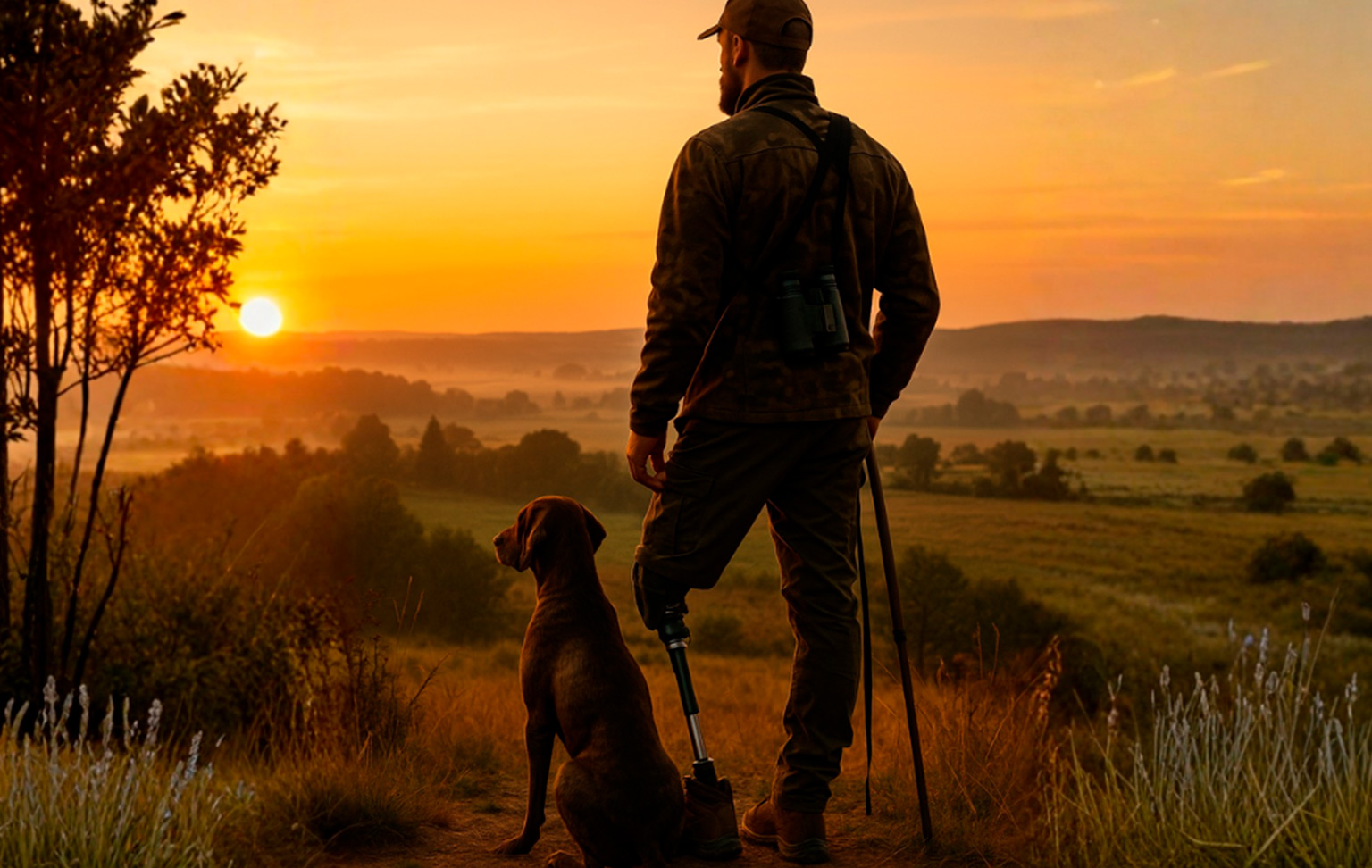
Inclusive hunting: new technologies for hunters with disabilities
Hunting, from its origins, is an activity that combines technique, knowledge of the environment, and a deep connection with nature.
Traditionally associated with physical exertion and skill, hunting is now undergoing a transformation thanks to technology and a more inclusive vision. An increasing number of projects, tools, and adaptations are enabling people with disabilities to enjoy hunting safely, independently, and with respect for the natural environment.
Hunting as a Space for Inclusion
In recent years, the Royal Spanish Hunting Federation (RFEC) has promoted various initiatives to ensure that hunting is accessible to everyone. Within its Inclusive Sport program, it promotes the participation of hunters with physical, sensory, or intellectual disabilities in federated competitions and activities, offering technical support, training, and adapted equipment.
One of the most noteworthy initiatives is the “Inclusive Hunting” project, developed in collaboration with the Young Sports Foundation of the Spanish National Sports Council. Its objective is to facilitate access for people with disabilities to the responsible practice of hunting, in both small and big game, promoting equal opportunities and increasing the visibility of these athletes within the hunting sector.
Organizations such as Hunters with Disabilities Spain (CDE) and the Spanish Federation of Sports for People with Physical Disabilities (FEDDF) also actively work to support hunters who require specific equipment or adaptations, demonstrating that hunting can and should be an open and inclusive activity.
Technology and Adaptations: Innovation at the Service of the Hunter
Technology has been crucial in expanding the possibilities for many hunters with reduced mobility or sensory disabilities. Some of the most widespread solutions in recent years include:
Adapted Aiming and Firing Systems
Specialized manufacturers have developed adjustable supports, electronic triggers, and remote-controlled sights that allow the weapon to be handled without full manipulation. In some cases, firing can be done using buttons or controls activated by hand, shoulder, or even breathing, depending on the type of mobility.
These adaptations are used, for example, in the RFEC’s adapted shooting championships, always under the safety and homologation standards required by current legislation.
All-terrain wheelchairs and adapted vehicles
One of the biggest challenges for many hunters with physical disabilities is accessing the terrain. For this reason, all-terrain electric wheelchairs or tracked vehicles have become popular, allowing them to move through wooded areas or uneven paths with complete stability.
Models like those from Trackchair, or adaptations developed in collaboration with local hunting associations, have allowed numerous hunters to actively participate in driven hunts or stalking again.
Apps and electronic aids
Geolocation, voice communication, and audio navigation apps facilitate orientation and monitoring of hunting areas. Systems exist that allow hunters to map safe routes, mark GPS points, and receive audible or vibration alerts for safety boundaries or the presence of other hunters.
Drones and thermal cameras are also used for auxiliary purposes—for example, locating safe areas or recovering game—always complying with the regulations governing their use during hunting activities.
Experiences and Examples in Spain
In regions like Castile and León, Aragon, and Extremadura, adapted hunting events have already been held, organized with the support of regional federations and entities such as the Artemisan Foundation. These events bring together hunters with different types of disabilities, professionals from the sector, and instructors specializing in hunting safety and ethics.
In Navarre, the Baztan Hunting Society has been running a volunteer accompaniment program since 2021, in which veteran hunters collaborate to facilitate the participation of fellow hunters with reduced mobility.
In Andalusia, accessible hunting stands have been installed in hunting areas managed by local associations, with ramps, platforms, and adapted parking areas.
These examples reflect a clear trend: inclusive hunting is not an exception, but a reality that is growing year after year.
A More Accessible and Aware Future
Accessibility in hunting isn’t limited to technology. It also involves a change in mindset: understanding hunting as a space where everyone can share the same passion with equality and respect.
Technical innovation facilitates this path, but true progress comes when institutions, clubs, and hunters themselves commit to inclusion and mutual support.
Inclusive hunting represents an ethical and social evolution within the sector: keeping a tradition alive by adapting it to present-day values.
Because enjoying the outdoors…
- Big Game (4)
- Chiruca (4)
- Fairs (2)
- Hunting dogs (6)
- News (11)
- Relevant information (35)
- Small Game (1)