
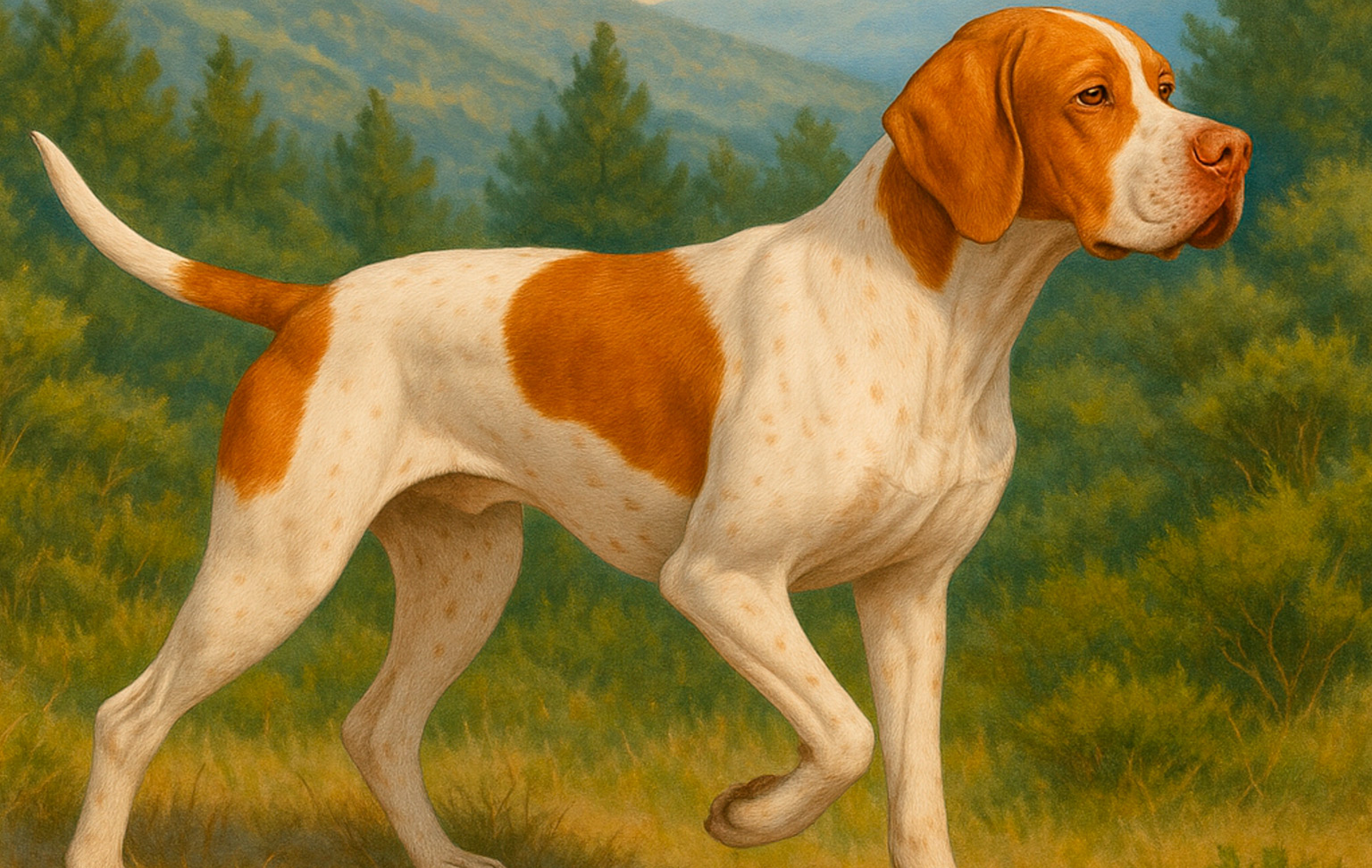
The Pachón Navarro: history, characteristics and hunting value of a unique breed
The Pachón Navarro is one of the oldest and most emblematic hunting dog breeds of the Iberian Peninsula.
Known for its distinctive split nose—which has brought it international fame—this dog is not only a cultural icon of Navarre and northern Spain, but also an effective ally in small game hunting, especially in rugged terrain and with feathered game.
Origins and History
The Pachón Navarro appears in documents dating back to the 16th century, in hunting chronicles of the Spanish nobility. It is believed to descend from ancient Iberian hounds crossed with pointing dogs from France and Flanders, which would explain its resemblance to the French Pointer and the Pointer.
Its heyday was between the 19th and early 20th centuries, when it was common in driven hunts and partridge hunts in northern Spain. The Spanish Civil War and the arrival of foreign breeds nearly led to its extinction, but thanks to the efforts of local breeders and the National Association of the Pachón Navarro, the breed has recovered and is now recognized by the Royal Canine Society of Spain (RSCE).
Classification
- FCI Group: Not officially recognized by the FCI, although in Spain it is registered in Group 7 (Pointing Dogs).
- Main Function: versatile pointing dog, specialized in small game hunting.
- Geographic Range: originating in Navarre, but present throughout Spain thanks to specialized breeders.
Morphology and Physical Characteristics
- Size: male 48–57 cm; female 47–56 cm at the withers.
- Weight: between 20 and 30 kg.
- Head: strong, with a slight stop; slightly drooping lips.
- Nose: characteristic split nose, which is not a fault, but a distinctive trait.
- Ears: long, flat, and drooping, similar to those of the German Shorthaired Pointer.
- Body: robust, compact, and with a deep chest.
- Coat: short, smooth, and dense, with colors ranging from white with orange, brown, or black markings to roan.
Movement and Abilities
The Pachón Navarro is a dog with a slow but steady gait, ideal for hunting in scrubland, forests, and uneven terrain. It is not as fast as an English Pointer, but it compensates with stamina and meticulous tracking ability, making it a highly valued dog for hunting partridge, quail, and woodcock.
Temperament and Behavior
- Balanced and docile: easy to handle in the field and at home.
- Innate hunting instinct: excellent sense of smell and great focus on pointing.
- Sociable: adapts well to family life, although it needs daily exercise.
- Persistent: does not give up easily, which makes it especially useful on long days.
Training
The Pachón Navarro is an intelligent and receptive dog, although somewhat stubborn at times. It responds best to patient and positive training, with short sessions and consistent reinforcement.
It is recommended to begin basic obedience training as a puppy and then work on pointing and retrieving in the field. Their tracking ability and concentration facilitate learning, although it is advisable to reinforce control over longer distances.
Health
This is a generally healthy and hardy breed, adapted to varied climates. However, it has a certain predisposition to:
- Hip dysplasia (like many pointing dogs).
- Otitis due to the shape of its ears, if they are not properly cared for.
- Minor eye problems in older dogs.
The split nose does not pose a health problem; on the contrary, some experts believe it can enhance the sense of smell.
Strengths in hunting
- Exceptional sense of smell, enhanced by the distinctive cleft nose.
- Slow and meticulous tracking ability, ideal for woodcock and partridge in dense undergrowth.
- Great physical stamina.
- A well-balanced dog, easy to handle, and very versatile.
Weaknesses in hunting
- Slower than breeds like the Pointer or the German Shorthaired Pointer.
- Can be somewhat stubborn during training if the appropriate methodology isn’t used.
- Needs plenty of exercise to avoid becoming overweight and maintain its physical condition.
Interesting facts
- The Pachón Navarro is known internationally as the “Double-nosed Spanish Pointer” and has been the subject of scientific studies on its olfactory abilities.
- It is estimated that there are only a few thousand specimens worldwide, making it a rare and exclusive breed.
- It was declared an endangered native breed, which reinforces the value of its breeding and preservation.
The Pachón Navarro is much more than a hunting dog: it is a symbol of tradition and an example of how the passion for hunting has preserved a unique breed. Its combination of exceptional sense of smell, balanced temperament, and stamina makes it an indispensable ally for demanding hunters, especially when hunting small game birds in challenging terrain.
Hunting with a Pachón Navarro is not only about enjoying an effective dog, but also about helping to keep alive a part of Spanish hunting history.
- Big Game (6)
- Chiruca (6)
- Fairs (2)
- Hunting and technology (1)
- Hunting dogs (6)
- News (13)
- Relevant information (49)
- Small Game (2)