
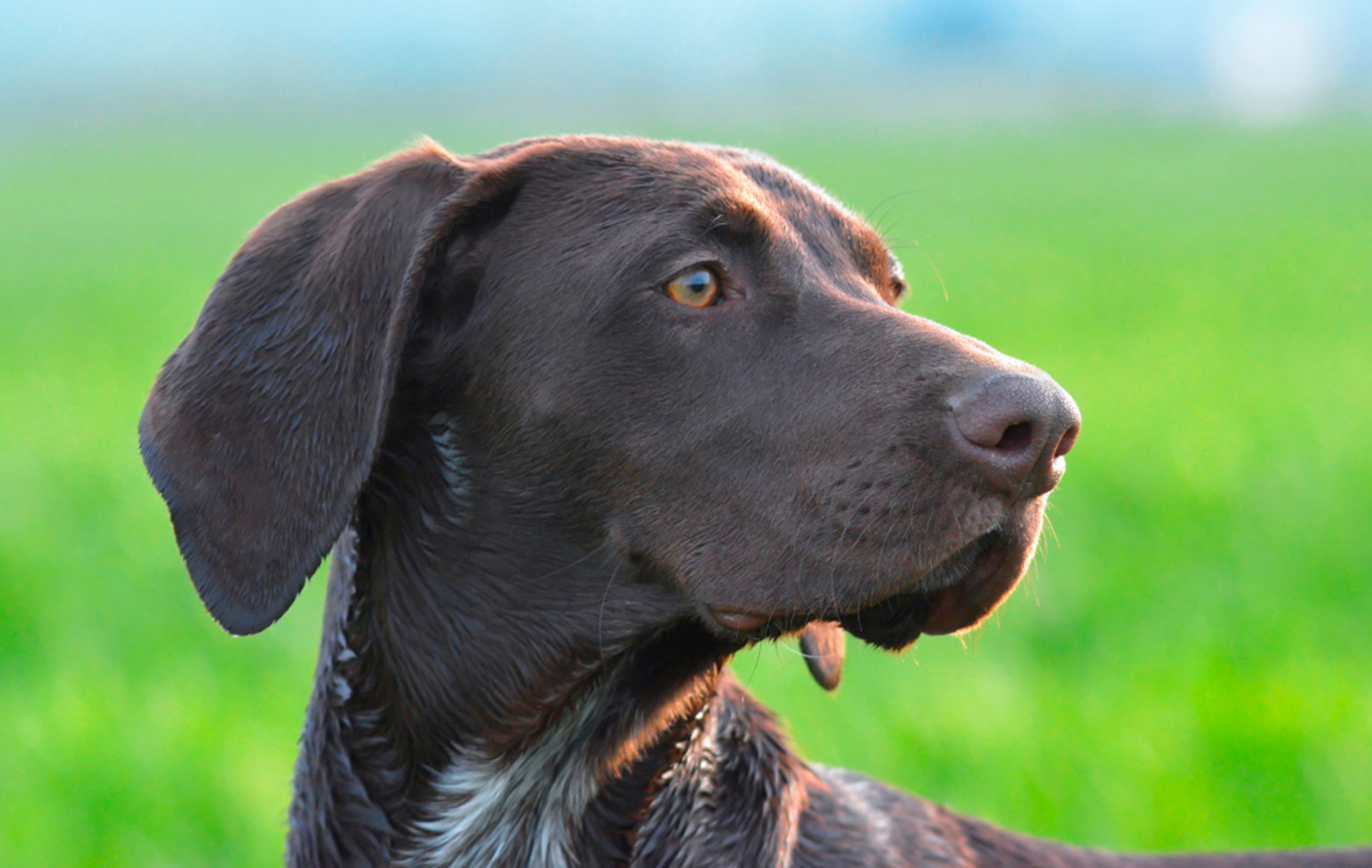
Hunting with dogs: tips for training and caring for your pointing partner
In small game hunting, few images are as beautiful as that of a pointing dog standing firm, motionless, with its gaze fixed and its body tense, indicating the presence of game.
Behind that gesture lie many hours of work, patience, and a relationship built on trust. Properly training and caring for a pointing dog not only improves its performance in the field but also guarantees its physical and mental well-being and the safety of the hunt.
The pointing dog: instinct and discipline
Pointing dogs are animals with extraordinary sensitivity and olfactory capacity. Breeds such as the German Shorthaired Pointer, English Pointer, English Setter, Brittany Spaniel, and the Kurzhaar combine speed, intelligence, and an enormous capacity for concentration.
Their function is to locate small game (partridge, quail, woodcock, pheasant), point firmly, and, upon the hunter’s command, maintain respect for the flight and the shot. Subsequently, they must retrieve the game without harming it.
For this sequence to unfold correctly, training must begin early, progressively, and always with methods that promote the dog’s motivation and stability.
Training: Phases and Technical Principles
1. Basic Obedience and Bonding
It all begins with the relationship. The dog must know its name, come when called, walk without pulling, and obey simple commands: stay, come, sit.
This phase is worked on between 3 and 6 months of age, with short sessions and positive reinforcement. The goal is not to demand results, but to build trust. A dog that enjoys learning will be a good hunter.
2. Development of the Hunting Instinct
Between 6 and 10 months of age, work begins in open fields, without pressure or punishment. The dog must learn to move in a zigzag pattern, taking advantage of the wind and maintaining eye contact with the handler. Wings or dead game can be used to pique its interest, but sparingly.
The experienced hunter lets the dog “discover” the game, calmly reinforcing each spontaneous point with a reward. It is preferable to consolidate the instinct rather than impose control.
3. Pointing and Respecting the Flight
Once the dog is confident in the field, work begins on maintaining a steady point and respecting the flight. Farm-raised game or partridges released in controlled enclosures are used. When the dog points to the game, it is commanded to stay before moving forward. The shooting should be introduced gradually and with desensitization: first at a distance, with low calibers, always associating the sound with something positive (the retrieval or the reward).
Never force the point or harshly correct a missed flight; sensitive dogs can develop a fear of the gun or inhibit their search instinct.
4. Retrieving and Delivering
Retrieving is a technical and delicate skill. It is taught first with objects, then progressing to live game. The dog must retrieve and deliver without biting or playing, maintaining self-control even when excited. The use of the drop command and practice in water or difficult terrain help to perfect the technique.
Physical Condition and Care Before the Hunt
A pointing dog in season needs physical preparation similar to that of an athlete.
- Pre-hunt training: controlled walks, endurance work, and muscle strengthening (especially in the legs and back).
- Diet: a balanced diet rich in animal protein and healthy fats. Many veterinarians recommend specific kibble for working dogs with at least 28% protein and 18% fat.
- Hydration: offer water before and after each session; prevent the dog from drinking from puddles or stagnant water.
- Veterinary check-up: verify vaccinations, internal and external parasite control, and the condition of the paw pads. The paw pads can be gradually hardened with specific products (such as rosin ointments or 2-3% formalin solutions, always under veterinary supervision).
During the Hunt: Safety and Control
In the field, the hunter must be the dog’s point of reference.
- Avoid days of extreme heat: heatstroke is one of the most frequent emergencies in small game hunting.
- Monitor the terrain: wires, thorns, brambles, or stones can cause cuts and injuries.
- Control the working distance: a dog too far apart can lose contact; one too close reduces effectiveness.
- Signals and whistles: each command should be brief and clear; excessive shouting confuses and breaks concentration.
- Regular breaks: a 10-minute break every hour of work allows you to check paw pads, clean eyes and ears, and offer water.
After the day: recovery and well-being
After the hunt, the dog needs immediate recovery and care:
- Complete check: paw pads, between the toes, ears (grass, seeds), eyes, and armpits.
- Gentle cleaning: remove mud and moisture; dry the coat completely, especially in long-haired dogs.
- Rehydration and post-exercise nutrition: small portions rich in protein and carbohydrates, avoiding large meals immediately after intense exercise.
- Adequate rest: a dry bed, free from drafts, and at a comfortable temperature.
A short stretching or massage session helps prevent muscle tension, especially in older dogs or heavy breeds.
Regular veterinary checkups are essential. Many specialists recommend basic blood tests each season to detect possible anemia, parasites, or chronic dehydration.
The dog: a companion, not a tool
Effectiveness in the field depends not only on instinct or training, but also on the emotional bond between hunter and dog. The Royal Spanish Hunting Federation emphasizes that respect, patience, and positive reinforcement are the foundation of any successful hunt. A well-balanced, cared-for, and confident dog performs better and enjoys its work.
Because in small game hunting, the best shot isn’t the one that brings down the animal, but the one that culminates the perfect work of a dog that trusts its handler.
- Big Game (4)
- Chiruca (4)
- Fairs (2)
- Hunting and technology (1)
- Hunting dogs (6)
- News (11)
- Relevant information (36)
- Small Game (1)