
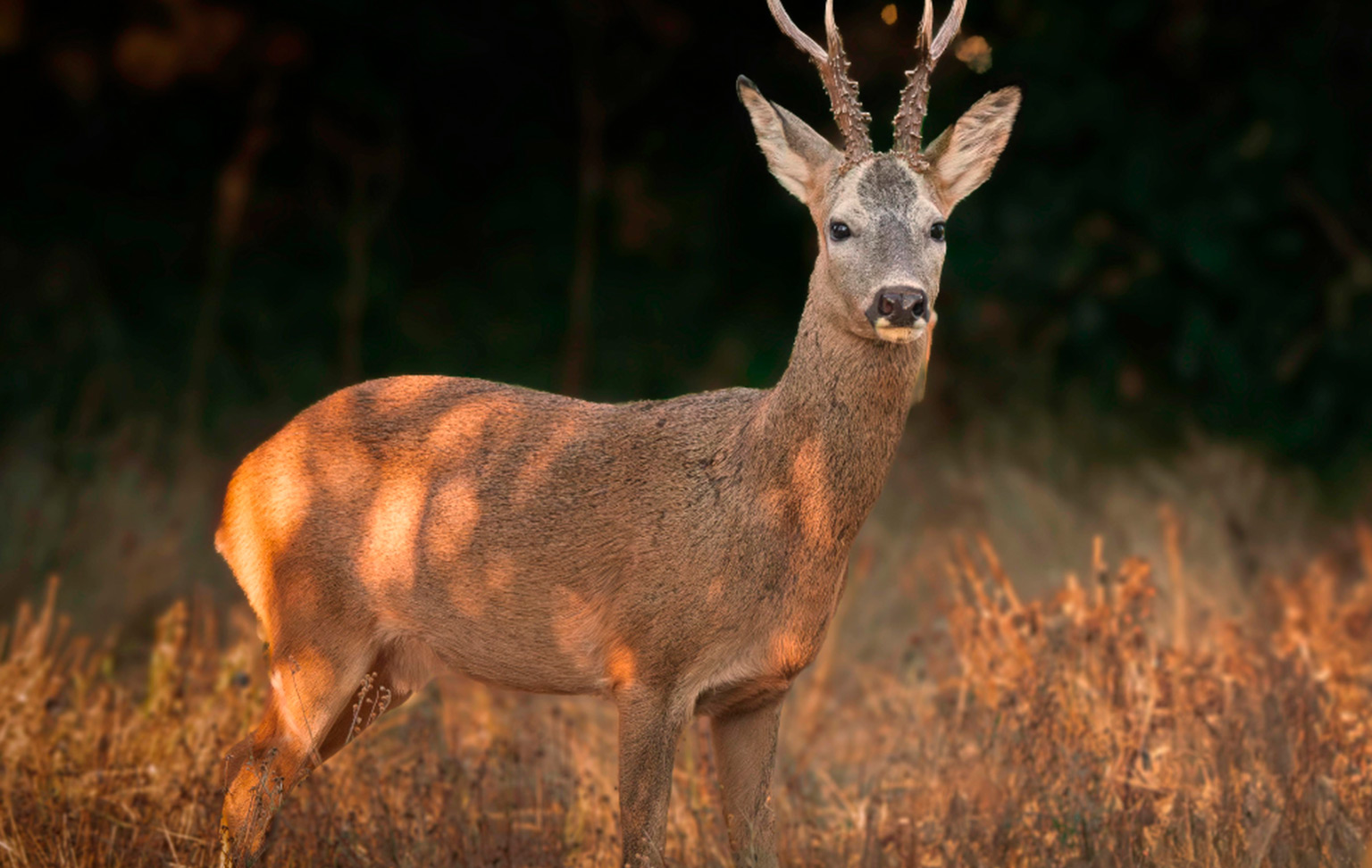
Roe deer management in agricultural ecosystems: sustainable management, damage and preventive measures
How to coordinate hunting and agriculture to maintain a balance.
The roe deer (Capreolus capreolus) is today one of the most emblematic and, at the same time, most challenging species for land management in Spain. Its expansion in recent decades, favored by forest recovery, the creation of ecotones, and the absence of large predators, has led it to occupy increasingly more agricultural areas.
In this context, roe deer management has ceased to be solely a matter of hunting and has become a challenge of balancing conservation, agricultural production, and landscape management.
This article explains, in a technical and accurate manner, how this species is managed in agricultural environments, what damage it causes, and what preventive measures are applied. All of this is presented from the perspective of sustainable hunting and responsible hunting practices.
The roe deer and its relationship with the agricultural environment
The roe deer is a species closely linked to:
- ecotones (transitions between forest and cultivation),
- agroforestry mosaics,
- open areas with nearby shelter,
- crops with tender shoots.
Their presence in agricultural areas is not accidental: it is due to their biology.
Behavior and territories
- Males are territorial during the mating season and spring-summer.
- Females use larger areas and may enter crops to feed during gestation and lactation.
- Dispersing juveniles are the ones that most frequently approach agricultural areas.
What are they looking for in the crops?
Mostly:
- tender shoots,
- legumes,
- growing fruit trees,
- cereals in their early stages,
- vineyards in budding phases,
- vegetable gardens or new shoots of broadleaf trees.
The problem is not consumption, but the delicate nature of early growth: damage to young budding compromises the entire season.
Damage caused by roe deer in agriculture
The damage is well documented and mainly affects:
Vineyard
- Grazing of tender shoots in spring.
- Scraping with antlers on posts or canes during pruning.
- Localized but significant damage.
Fruit trees (apple, cherry, pear…)
- Biting of buds and shoots.
- Damage in particularly sensitive young plantations.
Cereal (wheat, barley)
- Consumption of the first leaves, affecting the start of growth.
Sprouts of broadleaf trees
It affects:
- young oaks,
- chestnut trees,
- regenerating beech trees.
Peri-urban gardens and crops
In some places, the presence of roe deer in agricultural peripheries has become commonplace.
Sustainable management of roe deer in agricultural areas
Roe deer management is based on three fundamental pillars:
Quotas adapted to the reality of the hunting area
The key is not in hunting “more” or “less”, but in:
- assess densities,
- analyze actual damage,
- balance ages and sexes,
- adjust quotas within the hunting plan of the reserve (always approved by the administration).
Selective extraction
Modern roe deer management prioritizes:
- Remove sick or weakened animals,
- control males with poor conformation,
- balance populations where females are excessive (depending on the hunting area),
- avoid artificially high densities.
The goal: healthy populations in balance with the agricultural environment.
Coordination between hunters and farmers
This is the most critical point:
- Reporting of damage,
- identification of sensitive areas at specific times,
- joint review of usual roe deer entry points,
- management decisions tailored to the actual terrain.
Hunters and farmers collaborate to ensure that the extraction makes ecological and agronomic sense.
Preventive (non-lethal) actions to reduce harm
All these measures are widely documented and are successfully implemented in Europe.
Temporary fences and netting
Especially:
- in young vineyards,
- newly planted fruit trees,
- very tender crops.
They should not be permanent if they affect the passage of general fauna, but they can be used in critical phases.
Individual protectors
Rigid supports or protectors in:
- Young fruit tree plant,
- first-year grapevine.
They are effective, economical and easy to maintain.
Authorized repellents
Scented or taste-based repellents, applied during sensitive stages of budding.
They must be approved and comply with food safety regulations.
Increase visibility and traffic
The mere passage of people or agricultural vehicles at key times deters the animals, especially during juvenile dispersal.
Habitat and ecotone management
Actions such as:
- Clearing brush borders adjacent to the crop,
- defining less attractive edges,
- eliminating entry corridors,
- maintaining alternative pastures in safe areas.
Deterrent feeding stations (only where permitted by regulations)
In some hunting areas, the creation of feeding areas away from crops helps to divert pressure, always under supervision and with the relevant permits.
The importance of observation and monitoring
Managing roe deer requires real-world data, such as:
- spring and summer censuses,
- observation at checkpoints,
- analysis of repeated damage,
- surveys by farmers and game wardens,
- recording of movements in ecotones.
Without this data, any measurement is incomplete.
The roe deer is part of the Spanish landscape and a valuable game resource.
Agriculture, meanwhile, is essential to rural life.
Managing them together is a matter of balance:
- healthy populations,
- controlled damage,
- technical planning,
- collaboration among stakeholders,
- sustainable and well-managed hunting.
The key is not to eliminate the roe deer, but to keep it at densities compatible with a living, productive and healthy agricultural ecosystem.
- Big Game (4)
- Chiruca (4)
- Fairs (2)
- Hunting and technology (1)
- Hunting dogs (6)
- News (11)
- Relevant information (36)
- Small Game (1)