
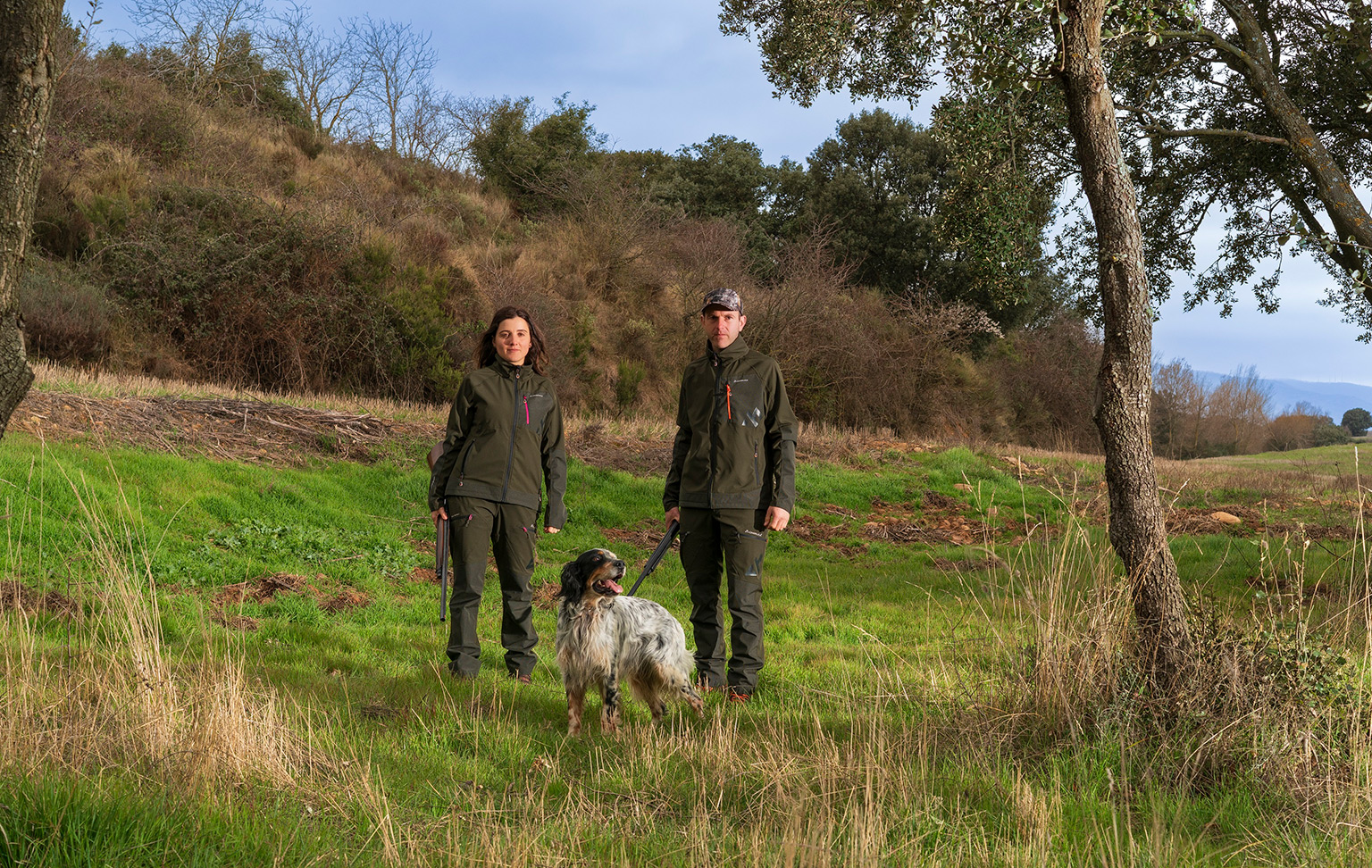
What to expect when hunting in spring: changes, challenges and how to adapt in the field
Spring is a unique season for the hunter. The countryside changes at an astonishing pace: what was just a few weeks ago sparse scrub and damp ground is now beginning to be covered in green shoots, flowers and vegetation that grows taller almost overnight.
For the hunter, this means one thing is clear: the hunting landscape is transformed. The animals’ habits change, their activity patterns shift, and many of the winter’s familiar cues become obsolete.
It is not necessarily the easiest time of year for hunting, but it is certainly one of the most interesting. Spring demands a better understanding of the terrain, greater observation, and intelligent movement.
Those who know how to adapt usually enjoy memorable days out.
THE COUNTRYSIDE AWAKENS… AND SO DO THE ANIMALS
After winter, many species go through a period of physical recovery. The energy reserves depleted during the cold months are replenished thanks to the emergence of new shoots, seeds and fresh food.
This has several consequences that the hunter quickly notices.
GREATER MOBILITY
With more food available, many animals begin to move more frequently between feeding, resting and cover areas.
In spring, it is common to find:
- recent tracks in areas that saw little activity in winter
- animals feeding in clearings or on the edges of fields
- shorter but more frequent movements
The countryside offers food in many places, meaning that animals do not need to travel long distances, but they do move between areas with ease.
CHANGES IN HABITS
The growth of vegetation completely alters the use of the land.
Animals begin to seek out:
- areas with tender shoots
- field margins
- clearings where the grass is beginning to grow
- areas with sufficient cover for resting
This means that some classic winter spots lose their activity, whilst new hotspots emerge, which are best located with binoculars and patience.
Hunters who spend time observing usually anticipate these changes.
MORE ACTIVITY IN THE EARLY MORNING AND LATE AFTERNOON
As temperatures rise, many animals concentrate their activity in:
- the early morning hours
- the late afternoon hours
During the middle of the day, it is more common to find them resting in cool areas or those with vegetation cover.
This means you need to plan your outings more carefully. Often, the difference between seeing animals or not lies in being in position when the countryside starts to stir.
SPRING STALKING: HARDER THAN IT LOOKS
Many hunters believe that spring makes stalking easier because the weather is more pleasant. In reality, the opposite is often true.
The main enemy of spring stalking is the vegetation.
In just a few weeks:
- paths become impassable
- clearings shrink
- open areas become overgrown with tall grass
This forces you to:
- move more slowly
- look around more frequently
- make better use of every high vantage point
The use of binoculars and a spotting scope becomes even more important.
Often the animal is there, but only part of its body is visible through the vegetation.
THE WIND: THE ALLY THAT NEVER CHANGES
If there is one thing that remains the same in every season, it is the wind.
But in spring it can become particularly treacherous.
The temperature differences between sunny and shady areas cause:
- shifting currents
- breezes that change direction throughout the day
- unpredictable air movements in ravines or on slopes
That is why it is always best to proceed calmly and check the wind frequently.
On many occasions, a well-planned stalking can be ruined in the final metres by a simple shift in the wind.
THE IMPORTANCE OF OBSERVING BEFORE MOVING
Spring rewards patient hunters.
Before setting out on a stalking hunt, it is advisable to spend time:
- studying the terrain through binoculars
- spotting movement in the clearings
- locating feeding areas
Many animals can be seen for just a few minutes whilst feeding before they lie down.
If the hunter has already observed the area beforehand, they can plan their approach more effectively.
If they arrive without any information, they are likely to be walking blindly and flushing animals without even seeing them.
SPRING GEAR: LIGHTWEIGHT AND COMFORTABLE
Spring also requires adapting your gear.
Days can start off cool and end up hot, especially if you’re walking a lot whilst stalking.
That’s why it’s best to opt for:
- lightweight clothing
- breathable fabrics
- layering systems that allow you to adapt to changing temperatures
Walking for hours in clothing that’s too heavy or not breathable enough will eventually take its toll.
FOOTWEAR BECOMES EVEN MORE IMPORTANT
If there is one piece of kit that makes all the difference in spring, it is footwear.
The terrain often presents a tricky mix of conditions:
- lingering winter damp
- mud in shady areas
- tall grass damp with dew
- slippery slopes
What’s more, on many days you end up walking further than expected.
That is why a good pair of hunting boots for this season must offer:
- lightness for long stalking
- good breathability
- waterproofing against damp and dew
- secure grip on uneven terrain
When the hunter moves comfortably and confidently, they can concentrate on what really matters: reading the terrain and closing in on the animal.
SPRING REWARDS THE ATTENTIVE HUNTER
Hunting in spring is not always easy.
The countryside changes rapidly, animals alter their routines and vegetation makes observation difficult.
But that is precisely why it is a season that many hunters particularly enjoy.
Every day requires adaptation, interpreting signs and gaining a better understanding of how wildlife moves in an environment that is awakening after winter.
Those who head out into the countryside with patience, observe calmly and move with respect for the terrain often discover that spring has something special to offer.
Because in this season, more than ever, the hunter who best reads the terrain is the one who ends up with the best opportunities.
- Big Game (5)
- Chiruca (5)
- Fairs (2)
- Hunting and technology (1)
- Hunting dogs (6)
- News (12)
- Relevant information (41)
- Small Game (2)