
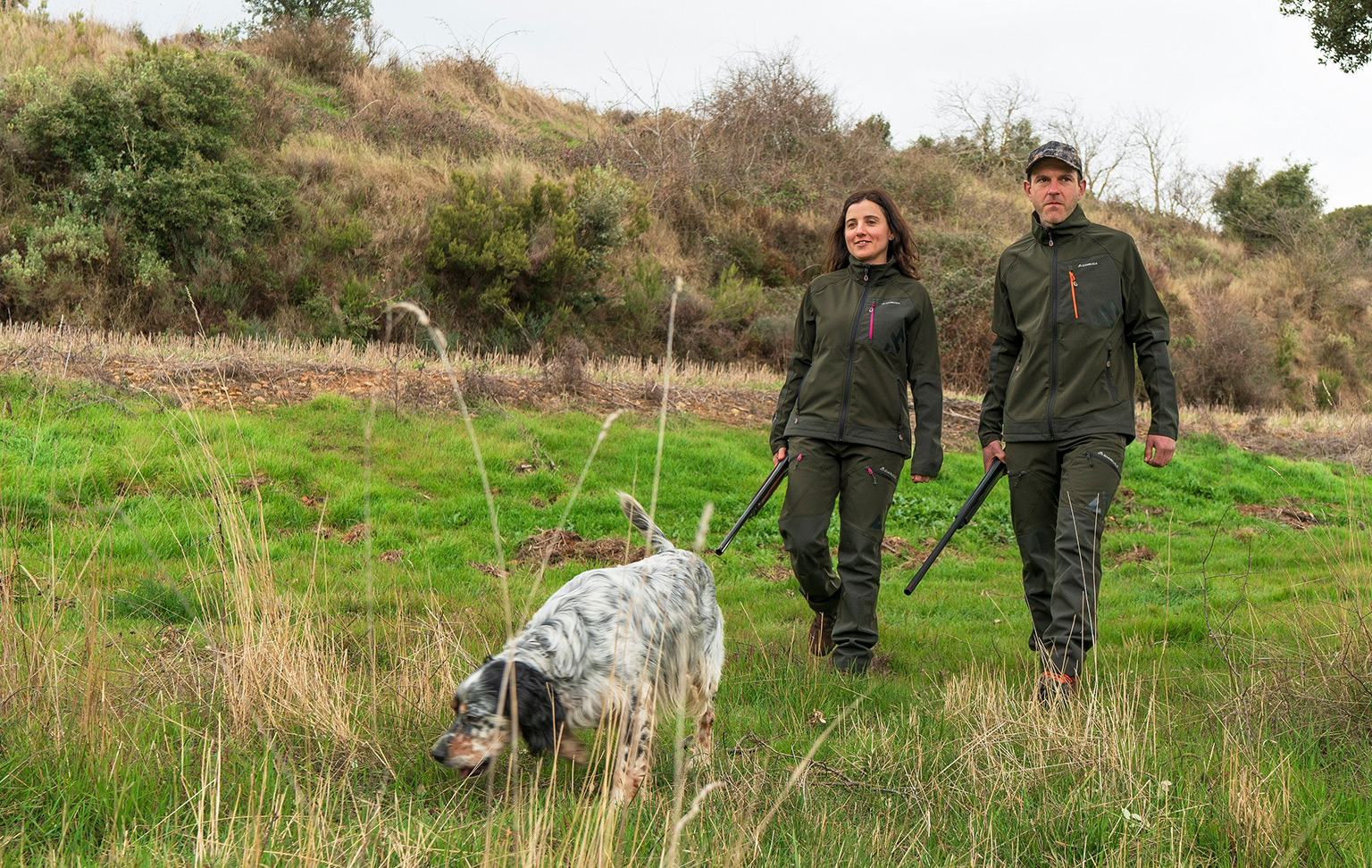
How to prepare your body for the hunting season: six weeks to get into top condition
A day’s hunting can involve several hours of activity over uneven terrain, slopes, stony ground or dense vegetation.
On top of the distance covered, there is the weight of your kit, changes in pace, periods of waiting, and weather conditions that do not always make progress easy.
That is why being in good physical shape at the start of the season can make a significant difference. It is not about following a demanding exercise regime or becoming an athlete, but rather about gradually acclimatising your body to the real demands you will face in the field.
The following guidelines do not constitute a personalised training plan. They are general advice for preparing for the season using common sense. Each hunter’s age, experience, state of health and fitness level should determine the pace of progression.
What abilities does a hunter need?
Physical preparation for hunting must be tailored to the nature of the activity. Walking for several hours through the countryside demands more than just cardiovascular endurance.
Endurance to sustain the effort
A good aerobic base helps you walk for longer, tackle inclines and recover better after a climb. It also enables you to maintain concentration and precision of movement as the day goes on.
The World Health Organisation recommends that adults regularly combine aerobic activity with exercises designed to strengthen muscles. However, these general recommendations should always be adapted to individual ability.
Strength to tackle slopes and carry equipment
Your legs, glutes and core are constantly engaged when climbing, descending, negotiating obstacles and maintaining stability whilst carrying a rucksack.
Strength is also important during descents. Here, your muscles must control each step and prevent your body from lurching forwards, especially when the ground is loose, wet or covered in vegetation.
This training should be carried out under the guidance of a fitness professional if you lack experience, have pre-existing discomfort or wish to follow a specific programme.
Balance and stability on uneven terrain
In the countryside, every step may require a different response. A loose stone, a hidden branch or a change in gradient force you to quickly readjust your footing.
Ankle stability, knee control and overall coordination are particularly important. Balance can also be gradually improved through progressive walks over varied terrain, provided the difficulty is appropriate to the hunter’s fitness level.
Mobility for natural movement
Sufficient mobility in the ankles, hips and back facilitates everyday actions such as crouching, stepping over a log, crossing scrubland or changing position.
Where there is stiffness or significant limitation, it is advisable to consult a physiotherapist or other healthcare professional to assess the cause and receive tailored advice.
A six-week progressive training programme
These six stages do not specify mandatory distances, loads or times. Their purpose is to structure the preparation and prevent the hunter from moving from a low-intensity activity to a demanding day’s hunt without a prior period of adaptation.
Week 1: getting back into the habit of walking
The first week should serve to establish your starting point. It is advisable to begin with comfortable walks, on easy terrain and at a pace that allows you to hold a conversation.
The aim is not to rack up kilometres, but to check how your legs, feet and back are responding. The onset of persistent discomfort indicates that you should reduce your activity or seek professional advice.
Week 2: Slightly increasing the duration
If the first week has gone smoothly, you can gradually extend the duration of your walks.
Progression should be moderate. Finishing completely exhausted does not mean you have trained better. At this stage, it is more useful to build up a regular routine and allow your body to adapt to the exertion.
Week 3: Introduce moderate inclines
Slopes significantly alter the demands of walking. Uphill sections increase cardiovascular exertion, whilst downhill sections require greater muscular control and stability.
It is advisable to start with familiar, moderate gradients, paying attention to your foot placement. Slightly shorter, more controlled strides tend to provide greater stability, especially on descents.
Week 4: walking on varied terrain
Once a foundation has been established, training can move on to surfaces more similar to those encountered during the season: forest tracks, footpaths, dirt tracks or slightly stony ground.
The aim is not to seek out unnecessary difficulties. The route should allow you to practise adapting your stride without taking risks that are out of keeping with the hunter’s level of experience.
Week 5: testing your actual kit
During the fifth week, it is advisable to go on a few outings wearing the boots, socks, rucksack and clothing you will normally use.
The aim is to identify the following in advance:
- Pressure points or chafing.
- Socks that retain too much moisture.
- A poorly fitted rucksack.
- Items that shift whilst walking.
- Unnecessary weight in your kit.
- Discomfort when walking for longer periods.
The load should be set conservatively to approximate what is needed for a real day’s hunt, without adding artificial weight solely to make the training more demanding. Carrying a load alters the effort and mechanics of walking, so it should be introduced gradually.
Week 6: reduce the intensity and arrive well-rested
In the days leading up to the start of the season, it is not advisable to try to make up for all the training that has not been done previously.
The final week should be used to maintain mobility, go on comfortable walks and check your kit. Arriving well-rested and without any strain is more beneficial than completing one last, excessively demanding outing.
Footwear is also part of your preparation
The boots you’ll be using during the season shouldn’t be worn for the first time on a long hike straight away. Even if the model is suitable, you need to check the fit, support and performance of the boot-and-sock combination for each foot.
During your preparatory hikes, you should check the following:
- That the heel remains secure and doesn’t slip.
- That your toes do not hit the front of the boot during descents.
- That there are no pressure points.
- That the lacing provides support without excessive compression.
- That the sole offers adequate grip for the terrain.
- That the socks are suitable for the boots and the expected conditions.
It is also important to check the general condition of the footwear: sole, seams, laces, buckles and membranes. Spotting a minor issue before the season begins can prevent problems later on.
Rest, hydration and recovery
Physical adaptation does not occur solely during the activity itself. Resting between outings allows the muscles to recover and prevents excessive fatigue from building up before the start of the season.
Hydration must also be prioritised during preparation, without waiting until you feel intensely thirsty. Requirements vary depending on temperature, humidity, the duration of the walk, the intensity of the effort and individual characteristics.
After a demanding walk, proper recovery includes rest, adequate nutrition and monitoring for any discomfort.
Signs that should not be ignored
Normal fatigue after a walk should not be confused with acute or persistent pain. It is advisable to stop the activity and seek professional advice if you experience symptoms such as:
- Pain that forces you to alter your gait.
- Visible swelling in a joint.
- A recurring feeling of instability.
- Dizziness, chest pain or disproportionate breathing difficulties.
- Discomfort that worsens from one outing to the next.
- Pain that does not improve with normal rest.
Preparation is not about pushing yourself to the limit
The aim of these six weeks is not to undergo a physical test, but to start the season better adapted to the demands of the terrain.
Walking regularly, gradually introducing inclines, getting used to the terrain and checking your kit helps you tackle the day’s outing with greater comfort and less fatigue. When more specific preparation is required, the right professional to design it is a graduate in Physical Activity and Sports Sciences, a qualified coach or a physiotherapist, depending on the circumstances.
In hunting, experience teaches you how to read the terrain. Responsible preparation ensures that your body is also ready to navigate it.
This content provides general information and is not a substitute for the assessment or advice of a healthcare professional or fitness expert.
- Big Game (6)
- Chiruca (8)
- Fairs (2)
- Hunting and technology (1)
- Hunting dogs (6)
- News (14)
- Relevant information (50)
- Small Game (2)